
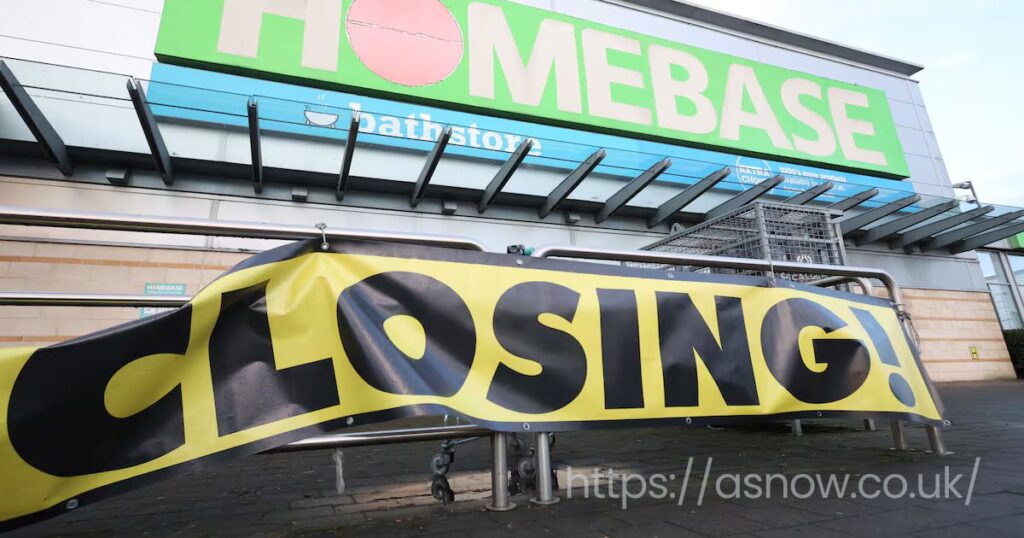
For decades, Homebase has been one of the UK’s most recognised home improvement brands. Known for its vast aisles of tools, furniture, paint, and gardening products, it symbolised British DIY culture. Yet, in 2025, the once-dominant chain faces one of its most challenging periods as news spreads that Homebase is closing stores across the country.
The announcement has raised questions about what went wrong, what will happen to employees, and whether the Homebase name will survive. This story is more than just another retail closure it’s a lesson in how changing economics, digital disruption, and strategic missteps can reshape even the most established businesses.
Homebase’s Rise and Fall – From Market Leader to Uncertainty
Homebase started in the late 1970s with a vision of providing everything homeowners needed under one roof. Its large warehouse style stores quickly became landmarks across the UK, offering convenience and variety that few rivals could match. During the 1980s and 1990s, Homebase grew rapidly, often seen as a symbol of British home improvement culture.
However, success in retail is fragile. After several changes in ownership, each new leadership team brought different ideas some of which backfired. Certain product ranges were replaced, store layouts were changed, and the brand lost its clear direction. Many loyal customers who once relied on Homebase began to drift toward competitors.
When the company was taken over by a foreign parent company years later, further changes followed, including rebranding efforts that confused rather than clarified. The result was a steady decline in sales, reduced profits, and growing debt. By late 2024, Homebase had reached a breaking point and entered administration.
Why Homebase Is Closing Stores
The closure of Homebase stores is not the result of one bad decision it is the culmination of years of financial strain, economic pressure, and shifting consumer behavior. Let’s explore the main reasons behind this large-scale restructuring.
1. High Operating Costs
Running large-format stores has become increasingly expensive. Business rates, rent, and energy bills have all risen sharply over the past few years. For a retailer with dozens of spacious sites, these expenses became unsustainable. The cost of keeping every store open exceeded what the business could generate in profit.
At the same time, the UK’s cost-of-living crisis has led many consumers to cut back on non-essential spending. Home improvement projects, once a steady market, have been delayed or canceled as households tighten their budgets. The combination of falling sales and rising costs placed immense pressure on Homebase’s finances.
2. The Shift to Online Shopping
Over the last decade, shopping habits have changed beyond recognition. Consumers now expect convenience, fast delivery, and competitive prices all of which favor online retailers. Homebase, like many traditional chains, was slow to adapt to the digital shift.
While competitors invested heavily in online platforms, same-day delivery, and mobile apps, Homebase relied on its physical stores. Unfortunately, that strategy no longer fits modern shopping patterns. Customers who once spent weekends browsing aisles now complete entire home improvement orders from their phones or laptops.
3. Strategic and Management Challenges
Frequent changes in ownership led to inconsistency. Each management group introduced new strategies, branding concepts, and product lines, but few were sustained long enough to succeed. Customers became unsure what Homebase stood for was it a premium home store, a budget DIY shop, or something in between?
This identity crisis, combined with outdated store designs and limited digital marketing, weakened customer loyalty. Without a clear brand message, Homebase struggled to stand out in a crowded retail landscape.
Impact of the Store Closures
On Employees
Thousands of Homebase employees have been affected by the closures. For many, these stores were more than workplaces they were community hubs. Losing their jobs brings financial uncertainty and emotional strain. While some staff members have found roles in other parts of the retail sector, others are still searching for new opportunities.
The closures also highlight a broader issue in UK retail employment: the instability caused by large chains downsizing or shifting to online models. Workers across the industry face increasing uncertainty as automation and digitalisation reshape traditional roles.
On Customers
For long-time customers, Homebase’s closures mark the end of a familiar shopping experience. The brand once offered the comfort of browsing garden furniture, tools, and paint samples all in one place. With many local stores shutting down, consumers now need to travel farther or rely on online alternatives.
Some regions will benefit from clearance sales and discounted stock, but once the doors close, local convenience disappears. Many households will miss the hands-on help that in-store staff provided something difficult to replicate in an online-only environment.
On Communities
Beyond customers and employees, entire local economies are affected. Large Homebase stores often served as anchors in retail parks, drawing shoppers who then visited nearby cafés and stores. When a major retailer closes, it can reduce foot traffic and impact smaller neighboring businesses.
Vacant buildings also create challenges for landlords and local councils, who must decide how to repurpose large commercial spaces. Some former Homebase sites may eventually become smaller retail units, gyms, or warehouses, but the transition is rarely quick or easy.
What’s Next for Homebase
Despite the closures, Homebase is not completely disappearing. The brand is undergoing a major transformation aimed at surviving in a new retail environment. The new ownership group behind Homebase has announced plans to retain select stores and expand its digital operations.
This new version of Homebase focuses on a smaller, more sustainable footprint. Instead of hundreds of stores, the company will operate fewer, strategically placed outlets that blend in-person shopping with strong online support. Many expect the brand to lean heavily into e-commerce, offering delivery and click-and-collect services across the UK.
The goal is to preserve Homebase’s name while modernising how it serves customers. Rather than trying to compete purely on store size, the company is focusing on customer experience, product quality, and convenience.
Lessons Other Retailers Can Learn
The Homebase story offers valuable lessons for other traditional retailers facing similar challenges:
- Adapt to change early – Waiting too long to modernise can be fatal.
- Embrace technology – Retailers must invest in digital infrastructure to remain competitive.
- Stay true to your brand – Frequent rebranding confuses customers and erodes trust.
- Optimise store networks – Fewer, better-run stores often perform more strongly than widespread, inefficient ones.
- Listen to customers – Consumer expectations evolve quickly; brands that fail to respond risk becoming irrelevant.
Homebase’s journey shows how even a beloved household name can falter when it doesn’t keep pace with its audience or adapt to economic realities.
Conclusion – The Future of Homebase
The phrase “Homebase closing stores” captures a moment of transformation rather than total collapse. The retailer’s story mirrors the wider shifts shaping modern retail: rising costs, digital disruption, and evolving customer expectations.
Although many communities are losing their local Homebase branches, the brand’s legacy continues. By focusing on a smaller network of stores, strengthening online operations, and restoring customer confidence, Homebase has a chance to rebuild its identity in the modern marketplace.
The lesson is clear: retail success no longer depends on how many stores a brand owns but on how well it understands its customers. Homebase’s next chapter will be defined not by the closures behind it but by the innovation ahead.
FAQs
Is Homebase closing all of its stores?
No. Homebase is closing many underperforming stores, but not all. Some profitable locations will remain open, and the brand will continue online.
Why is Homebase closing stores?
The closures are due to high operating costs, falling in-store sales, and the shift toward online shopping. The company is restructuring to stay competitive.
Will Homebase continue as an online retailer?
Yes. The brand plans to maintain and expand its online presence, allowing customers to order products through its website and other digital platforms.
What will happen to Homebase employees?
Many employees are being relocated, while others face redundancy. The company has pledged to provide support and resources for affected workers.
Is this the end of the Homebase brand?
No. Homebase will survive, but in a leaner form, with fewer stores and a stronger digital focus.
