

Denise Wallace is widely respected for her contribution to contemporary Indigenous craftsmanship and visual storytelling. Her work reflects a powerful blend of cultural tradition, personal history, and technical mastery. Over the years, she has become known for creating detailed, meaningful pieces that go far beyond surface-level design. Instead of focusing purely on appearance, Denise Wallace has consistently emphasized narrative, symbolism, and transformation, making her work deeply reflective and culturally grounded. This article explores her life, background, creative development, and lasting impact while highlighting why her name continues to hold significance in the world of fine craftsmanship.
Early Life and Cultural Background
Denise Wallace was born in Seattle, Washington, but her roots trace back to Indigenous communities in Alaska. From an early age, she was exposed to stories, traditions, and values that shaped her understanding of identity and belonging. Although she grew up away from her ancestral homeland, family connections ensured that cultural knowledge remained an essential part of her upbringing.
During her youth, Wallace spent meaningful time with relatives in Alaska, particularly her grandmother. These experiences left a strong impression on her, offering firsthand exposure to traditional ways of thinking, respect for nature, and the importance of storytelling. These early encounters with cultural practices would later influence not only what she created but also why she created it.
Connection to Indigenous Heritage
Denise Wallace belongs to the Chugach Sugpiaq people, an Indigenous group native to coastal regions of Alaska. This heritage plays a central role in her creative vision. Rather than treating tradition as something static or fixed, Wallace approaches her cultural background as a living source of inspiration.
Her work reflects Indigenous perspectives that emphasize transformation, interconnectedness, and spiritual depth. These values appear repeatedly in her creative output, often symbolized through layered forms, hidden details, and elements that change or move. Through her craft, Wallace expresses a worldview shaped by ancestral knowledge while adapting it to contemporary expression.
Education and Artistic Foundation
Wallace pursued formal training at the Institute of American Indian Arts, an institution dedicated to nurturing Indigenous creativity. There, she studied fine arts with a focus on metalwork and stone techniques. This educational environment provided not only technical skills but also a supportive space where cultural identity was encouraged rather than suppressed.
Her time in structured education allowed her to refine her abilities while experimenting with new ideas. She learned how to merge traditional concepts with modern craftsmanship, developing a strong foundation that would support her future work. By the time she completed her studies, Wallace had already begun shaping a distinct artistic voice rooted in both heritage and innovation.
Development of a Unique Creative Style
One of the most recognizable aspects of Denise Wallace’s work is her use of transformation as a central theme. Many of her pieces include movable parts, hidden compartments, or layered imagery that reveal something unexpected. These features are not decorative tricks; they represent deeper meanings tied to spiritual growth, inner identity, and personal evolution.
Her approach challenges the conventional idea that crafted objects should remain static. Instead, Wallace’s work invites interaction and discovery. Each piece tells a story, often inspired by Indigenous myths, animal symbolism, or human experience. This storytelling approach sets her apart and reinforces her reputation as an artist who communicates through form and function.
Materials Techniques and Symbolism
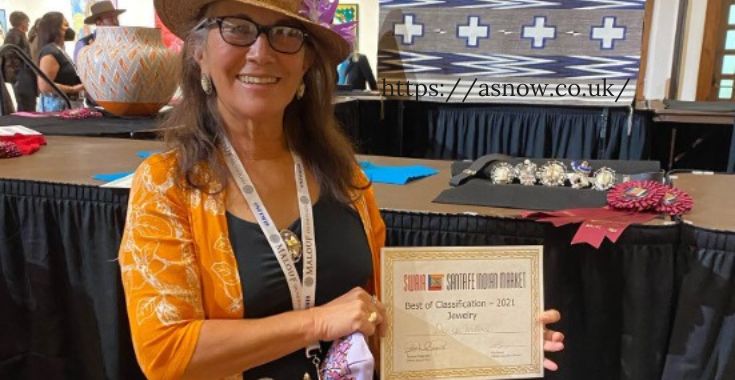
Denise Wallace is known for her thoughtful use of materials. She frequently works with precious metals, stones, and fossilized organic elements. Each material is chosen not only for its appearance but also for its symbolic meaning. Fossilized materials, for example, connect her work to ancient time, ancestry, and continuity.
Her techniques require a high level of precision and patience. The mechanical elements within her pieces must function smoothly while maintaining structural integrity. This combination of engineering and artistry reflects her dedication to craftsmanship and detail. The result is work that feels both technically impressive and emotionally resonant.
Family Collaboration and Studio Practice
Family has played a significant role in Wallace’s creative journey. For many years, she worked closely with her husband, who specialized in stone cutting. Their collaboration allowed each of them to focus on their strengths while creating unified works that reflected shared vision and trust.
Following personal loss, Wallace continued her practice with the support of her children, passing down skills and knowledge across generations. This continuation of family involvement highlights the communal nature of her work. Rather than viewing creativity as an individual pursuit, Wallace treats it as a shared responsibility and legacy.
Recognition Exhibitions and Professional Growth
Over the years, Denise Wallace’s work has been widely exhibited and collected. Her pieces have appeared in respected institutions and curated shows that focus on fine craftsmanship and Indigenous creativity. These exhibitions have helped introduce her work to diverse audiences, reinforcing her position as a leading figure in her field.
Collectors and critics often praise her for combining cultural authenticity with technical excellence. Her work is recognized not only for its beauty but also for its depth and meaning. This consistent recognition reflects decades of dedication and artistic integrity.
Cultural Importance and Artistic Influence
Beyond individual success, Denise Wallace’s impact lies in how she has influenced conversations around Indigenous representation in contemporary craft. Her work demonstrates that tradition and innovation can coexist without diminishing one another.
She has inspired emerging artists to embrace their cultural identities while pursuing modern forms of expression. Through her example, Wallace has shown that honoring heritage does not require imitation of the past, but thoughtful reinterpretation. Her influence continues to shape how Indigenous art is viewed, taught, and appreciated.
Legacy and Continuing Impact
Denise Wallace’s legacy extends beyond her finished works. She represents a model of artistic responsibility, cultural respect, and creative courage. Her dedication to storytelling, family collaboration, and technical mastery ensures that her influence will endure long into the future.
As new generations encounter her work, they are invited to reflect on identity, transformation, and connection. In this way, Wallace’s creations continue to speak, evolve, and inspire, just as living traditions do.
Conclusion
Denise Wallace’s journey is a testament to the power of creativity grounded in heritage. Through careful craftsmanship, meaningful symbolism, and deep respect for cultural values, she has created a body of work that resonates across time and place. Her story is not just about artistic success, but about preserving identity, honoring ancestry, and shaping the future through thoughtful creation.
FAQs
Who is Denise Wallace?
Denise Wallace is an Indigenous craft artist known for her detailed, symbolic, and transformative works rooted in cultural tradition.
What themes are common in Denise Wallace’s work?
Her work often explores transformation, storytelling, identity, and spiritual symbolism.
What materials does Denise Wallace commonly use?
She works with metals, stones, and fossilized organic materials, chosen for both beauty and meaning.
Why is Denise Wallace considered influential?
She has successfully blended Indigenous tradition with contemporary craftsmanship, inspiring both audiences and emerging artists.
What makes her creative approach unique?
Her use of movement, hidden elements, and narrative structure sets her work apart from traditional static designs.
