
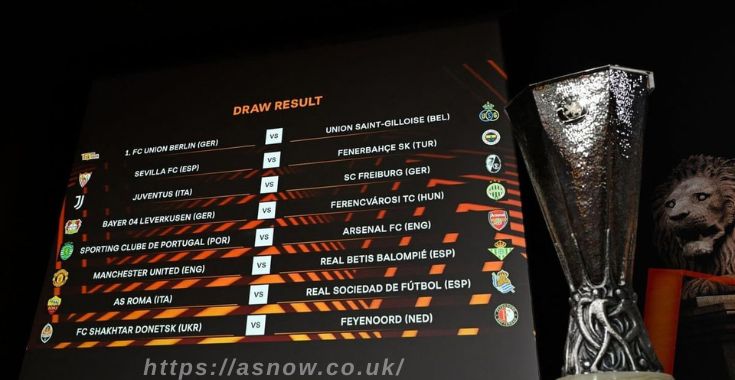
The Europa League draw has become one of the most anticipated events in European football. Beyond being a simple administrative process, it defines a club’s entire European journey. For the 2025–26 season, the introduction of the league phase has added a fresh layer of complexity and intrigue to the draw. Fans, coaches, and players all recognize that a favorable draw can make the difference between a deep tournament run and an early exit. This process sets the tone for months of competition, shaping strategies and ambitions across Europe.
How the Europa League Draw Works: Pots, Seeding, and Restrictions
The draw begins with all qualified clubs placed into pots based on their UEFA coefficient rankings. These rankings are calculated using each club’s performance in European competitions over the past five seasons. Clubs with higher coefficients are placed in Pot 1, while those with lower rankings go into Pot 4.
From there, the draw follows a structured but partially random process. Teams from different pots are paired to ensure diversity and fairness. One crucial rule is that no two clubs from the same country can face each other in the initial league phase. In addition, each team will face eight opponents — four at home and four away selected from across the four pots.
This format ensures that clubs encounter a mix of opponents with varying strengths. The result is a balanced yet unpredictable competition that keeps fans engaged from the first kick-off to the final whistle.
Key Highlights of the 2025–26 Europa League Draw
The 2025–26 draw marked the second year of the league phase format, replacing the traditional group stage system. Thirty-six teams participated, representing a wide array of footballing nations. The new structure means each club plays eight matches in total not within a fixed group but against a range of opponents from the four pots.
This season’s draw introduced exciting fixtures, with several top clubs facing tricky schedules. The format change aims to create more competitive balance while allowing smaller clubs to face well-known European sides, generating broader interest. The top eight teams after the league phase advance directly to the Round of 16, while those ranked 9th to 24th enter a knockout play-off.
Strategic Implications for Clubs
The Europa League draw is more than just a ceremonial event; it dictates strategic priorities for clubs. Coaches analyze travel distances, fixture congestion, and opponent styles as soon as the draw concludes. A draw featuring long-distance away games, for instance, can impact training schedules and domestic league performance.
A favorable draw, featuring nearby or lower-ranked opponents, allows clubs to rotate players and manage fatigue more effectively. On the other hand, a challenging draw demands full-strength lineups, making it harder to balance domestic and European commitments.
Beyond tactics, the draw affects financial planning. Clubs anticipate ticket sales, broadcasting revenues, and travel costs based on their assigned fixtures. For many mid-tier European teams, the financial benefits of hosting popular opponents can be significant.
The Balance of Luck and Structure in the Draw Process
The Europa League draw strikes a delicate balance between randomness and regulation. While the process is designed to be fair, many fans and pundits still view it as a test of luck. Some clubs inevitably end up with tougher opponents, while others benefit from more manageable fixtures.
However, UEFA’s use of seeding and pot placement ensures that no club faces an excessively easy or difficult route overall. This blend of order and chance keeps the competition exciting, as every club must be prepared for unpredictable outcomes. The draw, in essence, becomes a reflection of European football’s competitive spirit — where reputation alone guarantees nothing.
How Fans and Clubs Prepare for Draw Day
For clubs, preparation for the draw begins weeks in advance. They analyze potential opponents, calculate travel routes, and coordinate logistics for various scenarios. Coaches often work with analysts to assess playing styles of potential rivals, ready to adapt tactics immediately once fixtures are announced.
Fans, too, treat draw day as a celebration. Many supporters gather at club venues or follow live broadcasts to see which European cities they’ll travel to next. The anticipation builds community excitement and strengthens the connection between the club and its global supporters.
After the draw, clubs release fixture calendars, travel information, and ticket sale schedules. This phase is as much about organization as it is about enthusiasm a moment that brings players, staff, and fans together under the banner of European competition.
Controversies and Debates Surrounding the Europa League Draw
Despite being a carefully structured event, the draw has not escaped controversy. Some fans question whether the process is fully random, especially when high-profile teams seem to avoid facing one another early on. Others criticize the coefficient system, arguing that it favors historically strong clubs and limits opportunities for newcomers.
There is also ongoing debate about travel distances and match scheduling. Smaller clubs sometimes face logistical challenges that wealthier teams can manage more easily. Nevertheless, UEFA continues to refine the process to maintain fairness, transparency, and competitive integrity.
What the Draw Means for the Future of the Tournament
The Europa League draw serves as the foundation for the entire season’s narrative. The introduction of the league phase has modernized the competition, aligning it with the evolving demands of European football. By increasing the number of matches and opponents, UEFA aims to enhance both competitiveness and fan engagement.
For clubs, the draw represents opportunity a chance to test their abilities against diverse opponents, to showcase talent, and to gain valuable experience on the continental stage. For fans, it offers excitement, unpredictability, and the promise of unforgettable nights under the floodlights.
As the 2025–26 season progresses, the draw will continue to shape each team’s destiny. Whether it leads to glory or disappointment depends on how well clubs adapt, plan, and perform against the variety of challenges it presents.
Conclusion
The Europa League draw remains one of football’s most fascinating rituals a blend of anticipation, strategy, and chance. It symbolizes the start of a journey that unites clubs across Europe in pursuit of continental success. With the 2025–26 format emphasizing balance and competition, the draw is more vital than ever before. It influences everything from tactical planning to fan engagement, making it an essential part of the Europa League story.
FAQs
What is the Europa League draw?
The Europa League draw is the process that determines which clubs face each other in the tournament’s league phase. It defines fixtures, venues, and schedules for each team.
How does the draw work?
Teams are divided into four pots based on UEFA coefficient rankings. Each club is drawn to play eight opponents — four at home and four away — with restrictions to prevent same-country matchups.
Why is the draw important?
The draw shapes a club’s route in the competition. A favorable draw can make progression easier, while a difficult one can test squad depth and strategy.
When was the 2025–26 Europa League draw held?
The draw took place in late August 2025, marking the official start of the competition’s league phase.
What are the main rules of the draw?
Clubs from the same national association cannot face each other in the league phase. Each team plays eight games, with fixtures determined by the pot structure and draw system.
Has the Europa League format changed?
Yes. The league phase replaced traditional group stages, meaning each club faces a wider range of opponents instead of being confined to a single group.
Why do fans look forward to the draw?
For fans, the draw signals the start of new adventures, potential rivalries, and memorable European nights. It’s a moment of excitement and anticipation shared by millions across the continent.
Does the draw affect a club’s season strategy?
Absolutely. Coaches adjust training schedules, manage rotations, and allocate resources based on the draw’s results, balancing European ambitions with domestic responsibilities.
